
EVENTS AT TMEPID
Male Participation Trainings & Events
We Belive In Providing Quality Services At Right Time.
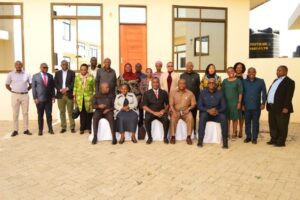
DRIVING ACCOUNTABILITY: TMEPID UNDER UNFPA SUPPORT, ENGAGE PARLIAMENTARIANS TO STRENGTHEN DOMESTIC FUNDING FOR FAMILY PLANNING
In 2021, Tanzania launched its FP 2030 Commitments. The commitments are aligned into four objectives i.e. 1) Adolescent Health; 2) Addressing Gender and Social norms that hinder access to and utilization of FP services; 3) Increasing use of modern contraception and 4) Domestic funding for FP. In responding and contributing to the objective 4. each year, TMEPiD, with support from UNFPA, conducts high-level advocacy meetings with selected Members of Parliament from both Mainland and Zanzibar. These include members from the Tanzania Parliamentary Association on Population and Development (TPAPD), representatives from the Parliamentary Budget Committee and the Parliamentary Social Services Committee. These strategic engagements aim to strengthen parliamentary support for increased domestic funding for Reproductive Health (RH) and Family Planning (FP), including follow-up on the implementation of the Compact Agreement. These meetings provide a timely platform to update Parliamentarians on the status of domestic financing for FP, as well as progress in implementing the FP Compact Agreement—signed by the Ministers of Health and Finance in both Mainland Tanzania and Zanzibar.
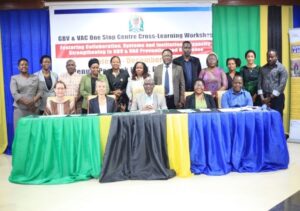
STRENGTHENING ONE STOP CENTRES FOR GBV RESPONSE IN TANZANIA: CROSS-LEARNING WORKSHOP HELD IN DAR ES SALAAM
The Ministry of Health, in collaboration with TMEPiD and with financial support from UNFPA, the European Union, and GIZ, convened a national cross-learning workshop in Dar es Salaam. The event brought together key stakeholders from various sectors to review the status and functionality of One Stop Centres (OSCs) in addressing Gender-Based Violence (GBV), Violence Against Children (VAC), child marriage, and Female Genital Mutilation (FGM) in Tanzania. The objectives of the workshop were to: 1. Facilitate cross-sectoral learning on OSC operational models and challenges. 2. Share evidence on effective GBV prevention and response strategies 3. Assess the status and readiness of OSCs across the country. 4. Identify gaps and propose strategies for improvement and sustainability. 5. Engage community stakeholders, faith leaders, men, and boys to build ownership and support for OSCs. A presentation on the assessment of OSC functionality and readiness at Regional Referral Hospitals was delivered by consultant Mr. Clement Kijinga.

ADVOCACY CONSULTATION WITH THE CHMT CONDUCTED IN TEMEKE MC
June 27, 2022
The DMO for Temeke Municipal Council in Dar es Salaam, Dr. Irene Haule gave directives to DRCHCO and DAC to consider youth champions from the SYP programme to be part of HFG Committee to ensure their agenda is reflected in the upcoming pre-planning meeting of CCHP.
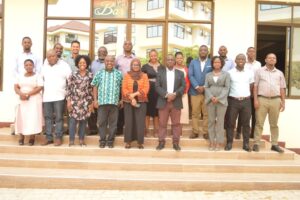
TANZANIA DEVELOPING FP BUDGET TRACKING DASHBOARD TO BOOST ACCOUNTABILITY AND ADVOCACY
Tanzania’s family planning program has long benefited from donor support for contraceptive commodities. However, since 2021, this support has significantly declined, with some donors cutting funding by up to 85%. In response, the Government of Tanzania has made strong commitments under FP2030, pledging to increase domestic financing for FP commodities by at least 10% annually. Similarly, under the Compact Agreement (CA) signed between the governments of Tanzania mainland, Zanzibar, and UNFPA, both governments committed to contributing starting at 1% of the UNFPA FP allocation in 2023, with a planned 1% annual increase every year. Tracking these commitments, however, has proven difficult. Disaggregated data on allocations and disbursements for family planning is often buried under broader RMNCAH categories, making it nearly impossible to monitor progress or identify shortfalls. To address this, TMEPiD, with financial support from UNFPA, led the development of an innovative FP Budget Tracking Dashboard. This tool is designed to enhance transparency, accountability, and advocacy, not only for government planners but also for CSOs and partners working to support the FP2030, ICPD+25, and CA commitments.
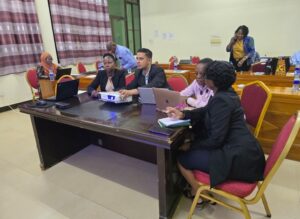
THE NATIONAL FP2030 PERFORMANCE REVIEW MEETING TO ALIGN PROGRESS WITH NATIONAL AND GLOBAL GOALS
Tanzania continues to demonstrate strong leadership in advancing access to voluntary and rights-based family planning (FP) services through its commitment to the global FP2030 partnership. In a recent national assessment meeting, stakeholders from across sectors gathered to evaluate progress, share successes, and identify lessons learned in the implementation of Tanzania’s FP2030 commitments. The Government of Tanzania, through the Ministry of Health (MoH), has pledged to expand access to modern contraceptive methods, increase domestic resource allocation for FP services, strengthen the quality and equity of service delivery systems, and remote sexual and reproductive health and rights (SRHR) of adolescents and youth. With support from civil society organizations (CSOs) and development partners, the MoH has been implementing strategic interventions to improve accessibility, quality, and equity in FP service delivery nationwide. The meeting marked a significant milestone following the country’s transition from FP2020 to the FP2030 partnership.

GIVING DIRECTIVES TO THE FACILITY IN CHARGES AT DODOMA
June 16, 2022
RRCHCO in Dodoma Ms. Nancy on behalf of RMO provide the directives to the facility in charge at Chamwino and Kongwa to have a plan of provide Youth-friendly services to youth during weekends and to ensure young people are involved in FHG committee and reflect their issues in the plan for 2023/2024.
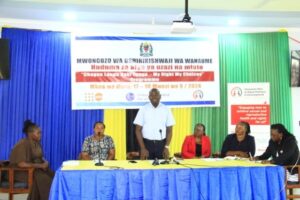
FROM POLICY TO PRACTICE IN PROMOTING GENDER EQUALITY THROUGH MALE INVOLVEMENT IN RMNCAH SERVICES: TANZANIA ROLLS OUT MALE INVOLVEMENT GUIDELINES IN MARA AND SHINYANGA REGIONS
For many years, efforts to promote maternal and child health, gender equality, and the fight against gender-based violence have often excluded one critical group, men. As a result, many men and boys remain uninformed about Sexual and Reproductive Health and Rights (SRHR) and Gender Equality and Women Empowerment (GEWE), leading to harmful expressions of masculinity, including gender and sexual violence. Perpetuated by gender and social norms that suppress women and girls social and economic rights, men and boys have ended up becoming perpetrators of Gender Based Violence including sexual violence. Recognizing this gap, a national strategy on Male Involvement has been developed to address the role of men in shaping sexual relationships, HIV prevention, SRHR, and overall gender dynamics. Men are central actors in these areas, particularly in communities where they are primary decision-makers on matters such as contraceptive use, family planning, and sexual practices. Women’s access to SRHR is often heavily influenced by male choices. With financial support from UNFPA through Marie Stopes Tanzania, the Ministry of Health led the development of the National Male Involvement Guidelines.
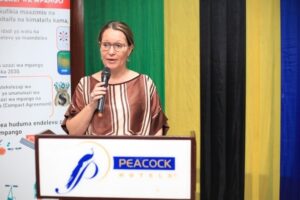
MAYA HANSEN, GENDER TECHNICAL ADVISOR FROM UNFPA DELIVERING HER OPENING REMARKS
A presentation on the assessment of OSC functionality and readiness at Regional Referral Hospitals was delivered by consultant Mr. Clement Kijinga. The findings sparked in-depth discussions among participants, who worked in groups to reflect on key challenges and share experiences. Key Issues Identified during the presentation and discussion include most OSCs lack dedicated and permanent staff, affecting service continuity; Inadequate and poor-quality data on GBV remains a major concern; Some RRHs continue to receive GBV/VAC cases despite lacking OSC facilities; A critical need for trained psychologists and counselors to ensure survivor dignity, confidentiality, and empowerment; The importance of establishing feedback mechanisms for survivors and stakeholders to enhance service quality. A Promising step forward was noted through a commitment that came from Assistant Commissioner of Police, Faidha Yusuph Suleiman, who oversees gender desks nationally. She requested the list of OSCs without deployed police officers, committing to take immediate action to fill these gaps, demonstrating cross-sectoral collaboration in action.

TMEPID ORGANISES REGIONAL DIALOGUES FOR YOUTHS AND DECISION-MAKERS
June, 2022
To bridge the gap between youth and decision makers, TMEPiD held an Advocacy dialogues in three regions of Dodoma, Dar es Salaam, and Zanzibar in June 2022. The advocacy dialogue was conducted with the aim of bringing together capacitated youth and their decision makers so that the youth may present their advocacy asks to the decision makers at regional and district levels and get their commitments to work on their SRHR concerns.

TMEPiD FACILITATES FP/RH CONTINGENCY PLAN DEVELOPMENT
June, 2022.
The Department of RCHS in the MoH led the development of a Contingency plan for FP/RH during a workshop held in Morogoro June 2022. The workshop, that was facilitated by TMEPiD, was aimed at drafting the Contingency plan that is vital for FP/RH intervention measures when it comes to emergencies concerning humanitarian settings in the country.

TMEPID PARTNER WITH YOUTH-LED ORGANIZATIONS TO ADVOCATE FOR YOUTH SRHR ISSUES
June, 2022
TMEPiD conducted advocacy meeting with leaders of youth-led organization in Kibaha June 2022. The meeting that was attended by leaders of different youth organisations from Dar es salaam, was aimed at sharing with them the SYP programme and review advocacy plans developed by youth champions.

YOUTH CHAMPIONS TRAINED ON SMART ADVOCACY
May, 2022
TMEPiD recently conducted SMART advocacy training for leaders of youth organisations in Morogoro. Participants of the training that was held in may 2022, comprised youth champions from selected project site (Dodoma, Zanzibar and Dar Es Salaam). The aim of the training was to introduce Safeguard Young People (SYP) programme as well as training them SMART advocacy approach in developing their advocacy issues.

TMEPID EMBARKS ON ADVOCACY FOR SOCIAL ACCOUNTABILITY ON CONTRACEPTIVES
March 03, 2018
Family Planning constitutes a core preventive intervention that has the potential to improve maternal, infant, and child health through spacing births, therefore averting unplanned pregnancies and preventable birth-related complications.

EMPOWERING YOUTH TO ADVOCATE FOR THEIR SRH RIGHTS
March 03, 2018
Access to Sexual and Reproductive Health and Rights (SRH&R) including Family Planning (FP) information and services amongst adolescents and youth in Tanzania is a growing challenge. Teenage pregnancies in the country have become a growing SRHR challenging.

TMEPID SENSITIZE COUNCILLORS ON THE IMPORTANCE OF GOOD START PROJECT
January 03, 2017
TMEPiD team recently visited Singida Municipality and Iramba districts where they organised a 3-day meeting to sensitise councillors from the Council Social Service Committee (CSSC) on Good Start Project. The aim of the event was to make sure that Councillors fully understand the project and make sure.

SRHR JOURNALISTS NETWORK
January 03, 2017
TMEPiD team recently visited Singida Municipality and Iramba districts where they organised a 3-day meeting to sensitise councillors from the Council Social Service Committee (CSSC) on Good Start Project. The aim of the event was to make sure that Councillors fully understand the project and make sure.

PROJECT HANDOVER RUKWA
January 05, 2017
Add a short summary of a news article or relevant publication with a link to the original. You can also add a video for extra engagement!

TMEP SINGIDA VISIT
January 05, 2017
Proin euismod vehicula vestibulum. Fusce ullamcorper aliquet dolor id egestas. Nulla leo purus, facilisis non cursus ut, egestas sed ipsum.Fusce ullamcorper aliquet dolor id egestas. Nulla leo purus, facilisis non cursus ut, egestas sed ipsum.
TMEP DOCUMENTARIES
January 03, 2017
TMEPiD team recently visited Singida Municipality and Iramba districts where they organised a 3-day meeting to sensitise councillors from the Council Social Service Committee (CSSC) on Good Start Project. The aim of the event was to make sure that Councillors fully understand the project and make sure.
TMEP IN DEVELOPMENT SPOT
January 05, 2017
Our organization is lead by a governance board comprising professional background in the fields of Policy Advocacy; Research and Evaluations and Youth Social – Economic development. The organization operates through a team of experts in the areas of SRHR; Gender; Masculinity; Male involvement; Advocacy and communication; M&E and Finance management.
Comments are closed.